Mileage Log Template for Cleaners (Free UK Download)
For most self-employed cleaners, mileage is the biggest single expense they have. It is also the one most often left unclaimed.
Every business mile you drive reduces your taxable profit. Over a year of driving between clients, that is a serious amount off your tax bill. But HMRC expects you to be able to show how you arrived at the figure, and "about 6,000, I think" is not a record.
This free mileage log gives you a weekly journey sheet to keep in the car and an annual summary that adds up to the number you need for your tax return.
At a Glance
- A one-page guide to what counts as business mileage and how the claim works
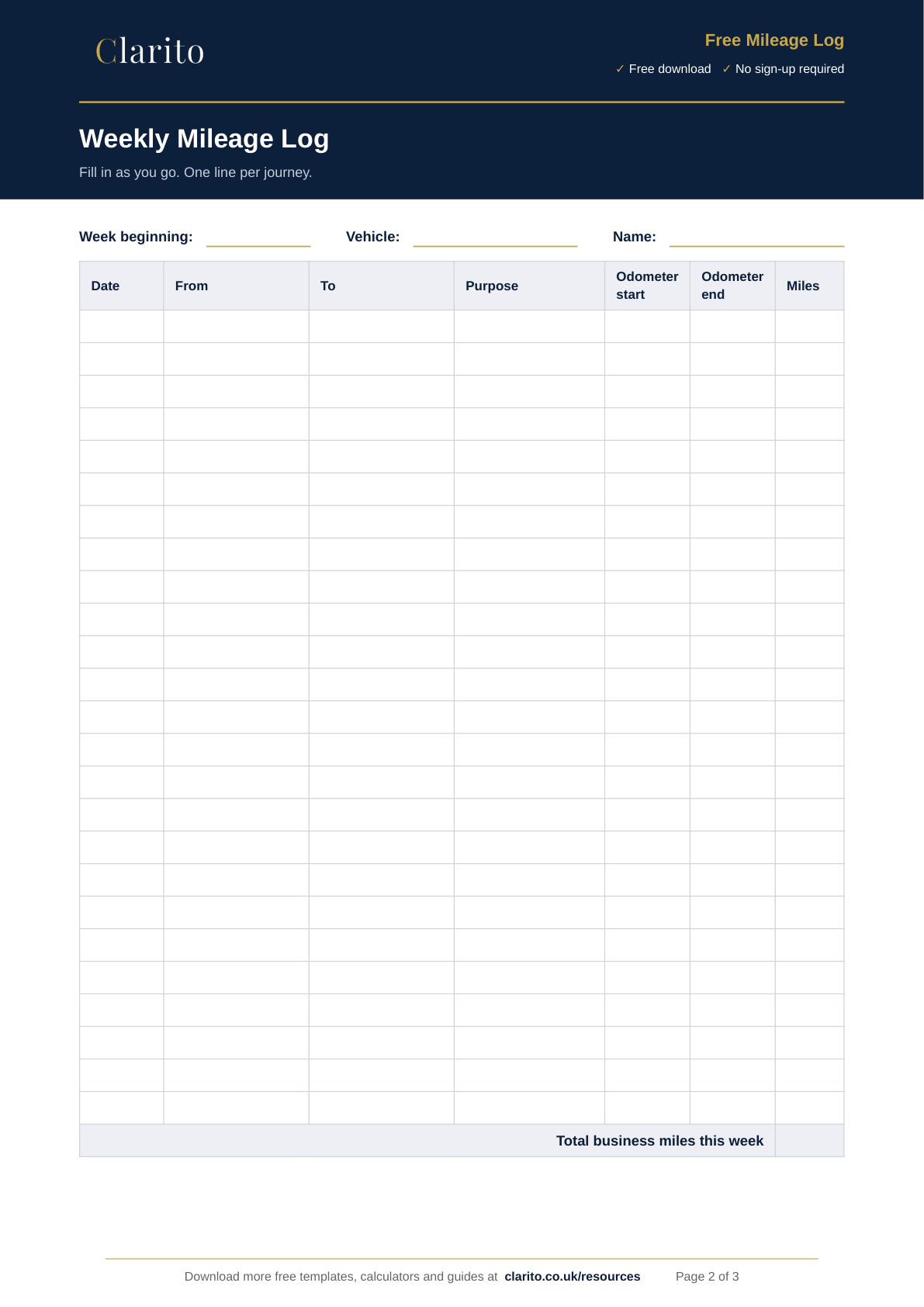
- A weekly mileage log with space for 25 journeys
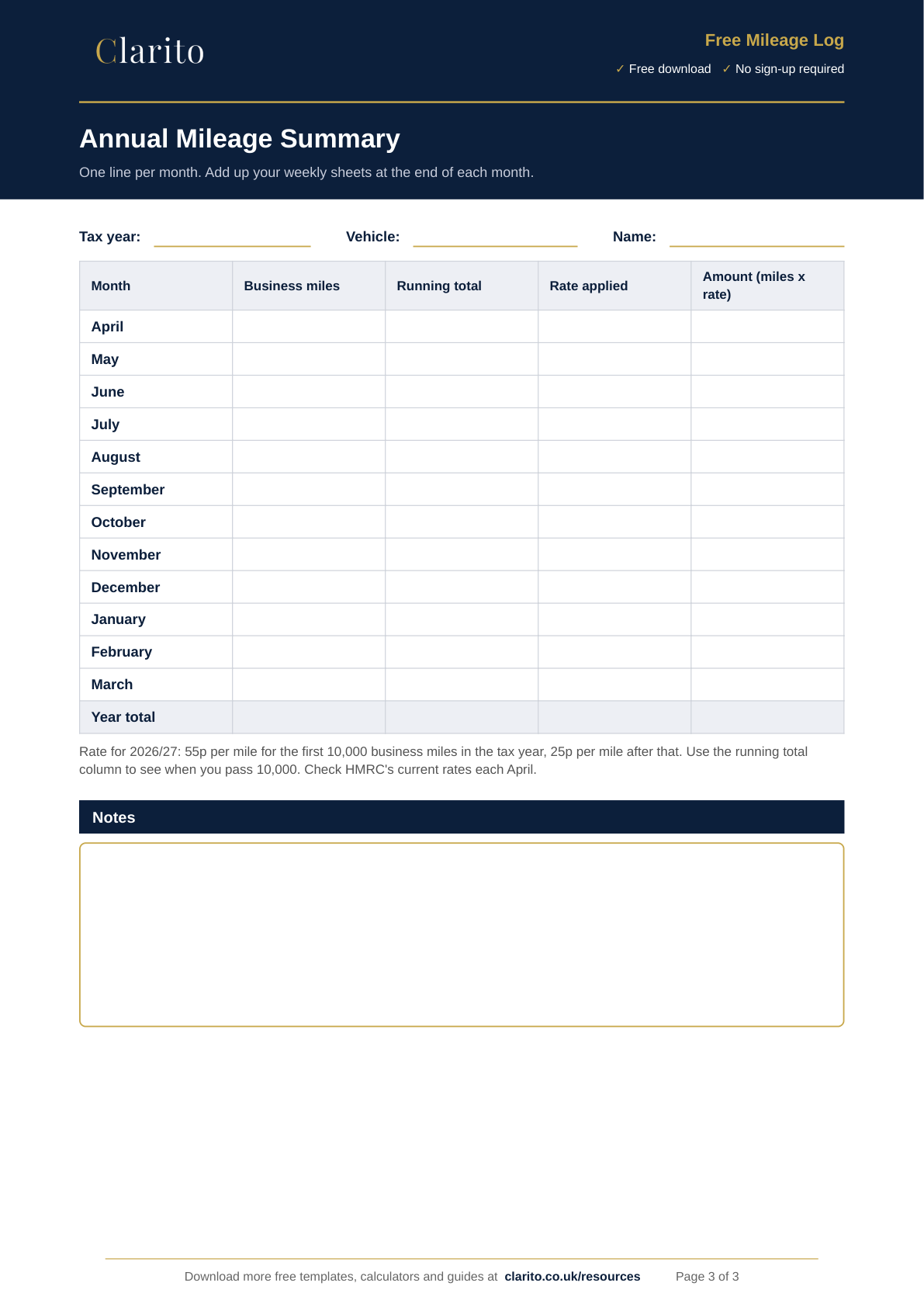
- An annual summary, one line per month, with a running total
- Designed specifically for UK self-employed cleaners. No sign-up required.
Free Download
No sign-up required. Print the weekly sheet as many times as you need and keep it in the car.
- Read this first (guidance page)
- Weekly Mileage Log
- Annual Mileage Summary
What Counts as Business Mileage
For a self-employed cleaner, business mileage usually includes:
- Driving between clients' properties during the working day
- Trips to buy cleaning products, equipment or supplies
- Trips to viewings, quotes and client meetings
- Trips to the bank, accountant or post office on business
Personal trips do not count, even if you stop at a client on the way. For journeys between home and a client's property, HMRC's rules depend on how your business is set up. Most self-employed cleaners with no fixed workplace can include these, but check HMRC's guidance on business travel if you are unsure.
How the Claim Works
The simplest method is HMRC's flat rate per mile. It covers fuel, insurance, servicing, wear and tear, everything. You do not need fuel receipts. You just need the miles.
For the 2026/27 tax year the rate is 55p per mile for the first 10,000 business miles and 25p per mile after that. Our free Mileage Allowance Calculator turns your total into a figure for your tax return.
The alternative is claiming the actual running costs of the vehicle in proportion to business use. That needs far more record keeping, and once you have chosen a method for a vehicle you generally have to stick with it. For a solo cleaner, the flat rate is the usual choice.
For a full explanation of the current rates and what changed, see our guide to HMRC mileage rates in 2026.
How to Use the Log
Keep the weekly sheet in the car. Fill it in as you go, not at the end of the month from memory. Reconstructed logs almost always come out low.
Record enough to be believed. Date, where from, where to, why, and the miles. A postcode or client name is enough for from and to. The odometer columns are optional, but a log with odometer readings is much harder to dispute.
Add up monthly. At the end of each month, total the weekly sheets and write one line on the annual summary. The running total column shows you when you cross 10,000 miles and the rate drops.
Keep the sheets. File them with your other tax records. HMRC can ask to see them for up to five years after the filing deadline.
Why It Adds Up
A cleaner driving 60 business miles a day, four days a week, does around 11,500 miles a year over 48 working weeks. At the 2026/27 rates that is a deduction of roughly £5,880. For a basic rate taxpayer paying Class 4 National Insurance, that is around £1,500 off the bill.
Most cleaners who do not keep a log claim a fraction of that, or nothing.
Download the Free Mileage Log
Our free Mileage Log is designed specifically for UK self-employed cleaners.
- A guidance page on business mileage and the flat-rate claim
- A weekly journey log
- An annual summary with running total
Looking for a Digital Alternative?
If you would rather not keep a paper log, Clarito is designed specifically for UK self-employed cleaners.
- Record mileage between jobs from your schedule
- See your total business miles and the deduction on the Finance page
- Keep mileage alongside income, expenses and your tax estimate
The log keeps itself, and the figure is ready when your tax return is.
This article is general information, not tax advice. Rates and rules change; check HMRC's current guidance or speak to an accountant if you are unsure.
Frequently Asked Questions
Do I have to keep a mileage log?
If you claim mileage, you need to be able to show how you calculated it. A log is the simplest evidence. Without one, an HMRC enquiry could reduce or disallow the claim.
Can I claim mileage for driving from home to my first client?
Usually, yes, if you are self-employed and have no fixed workplace. But it depends on your circumstances, so check HMRC's guidance or ask an accountant.
Can I claim mileage and fuel receipts?
No. The flat rate already includes fuel. You claim one or the other, not both.
What if I use my car for both business and personal trips?
That is normal. The log records only business journeys, and the flat rate is applied to those miles only.
How long do I need to keep the log?
At least five years after the 31 January filing deadline for the tax year it relates to.
Related Resources
Download the free Mileage Log or try Clarito free during testing.
Download Free LogAbout the author
Written by Clarito. Clarito builds software designed specifically for UK self-employed cleaners. We publish practical guides, free templates and business resources to help cleaners save time and stay organised.