Client Information Form for Cleaners (Free UK Template)
Collecting the right information before a client's first clean can save time, prevent misunderstandings and help you deliver a consistently professional service.
Whether you're cleaning one property a week or managing a full diary of regular clients, having all of your client information in one place makes every visit easier.
In this guide, we'll explain what information every cleaner should collect, why it matters and how our free Client Information Kit can help you stay organised.
At a Glance
Inside the free Client Information Kit you'll find:
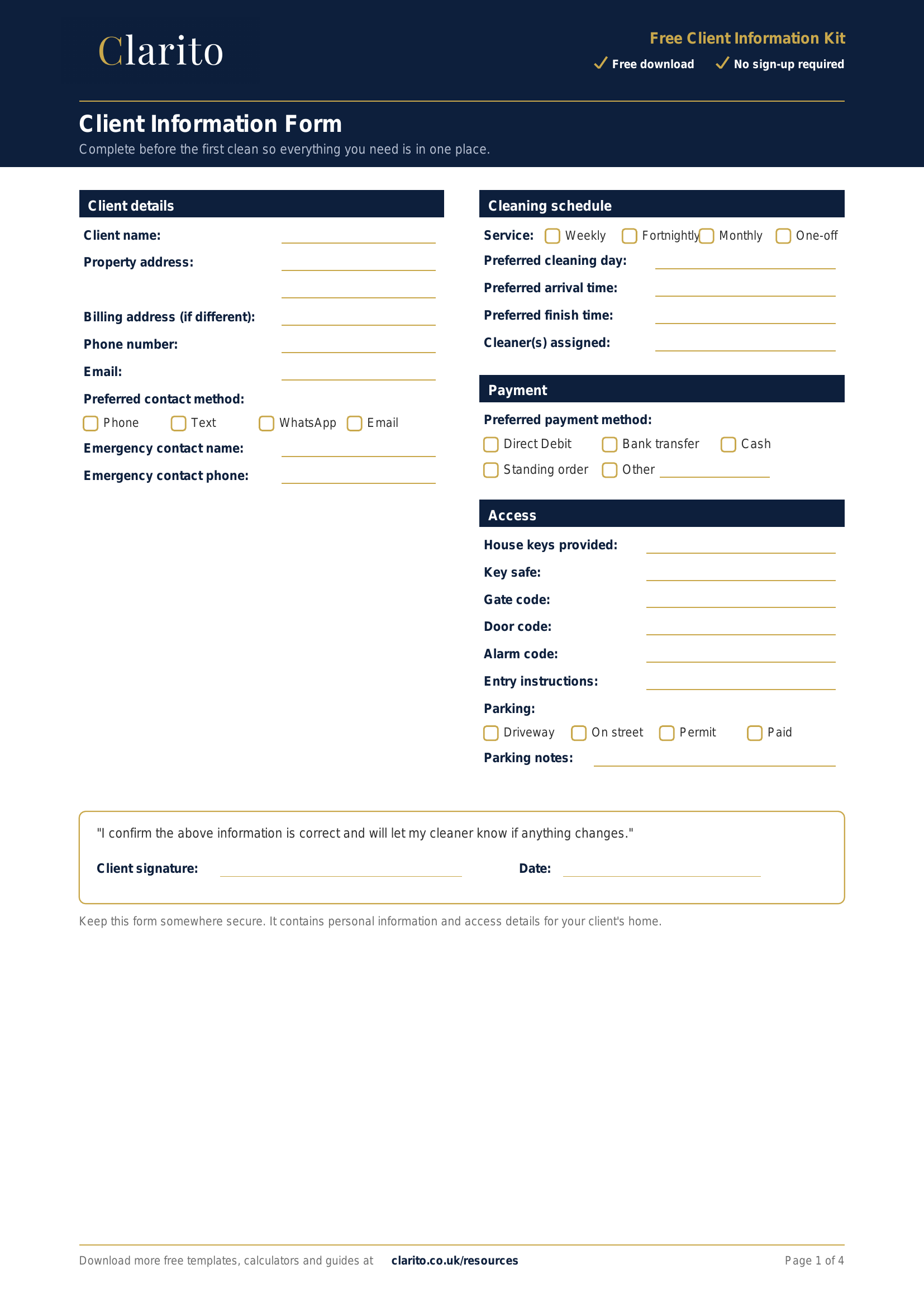
- Client Information Form
- Property & Cleaning Preferences Sheet
- Important Property Information Sheet
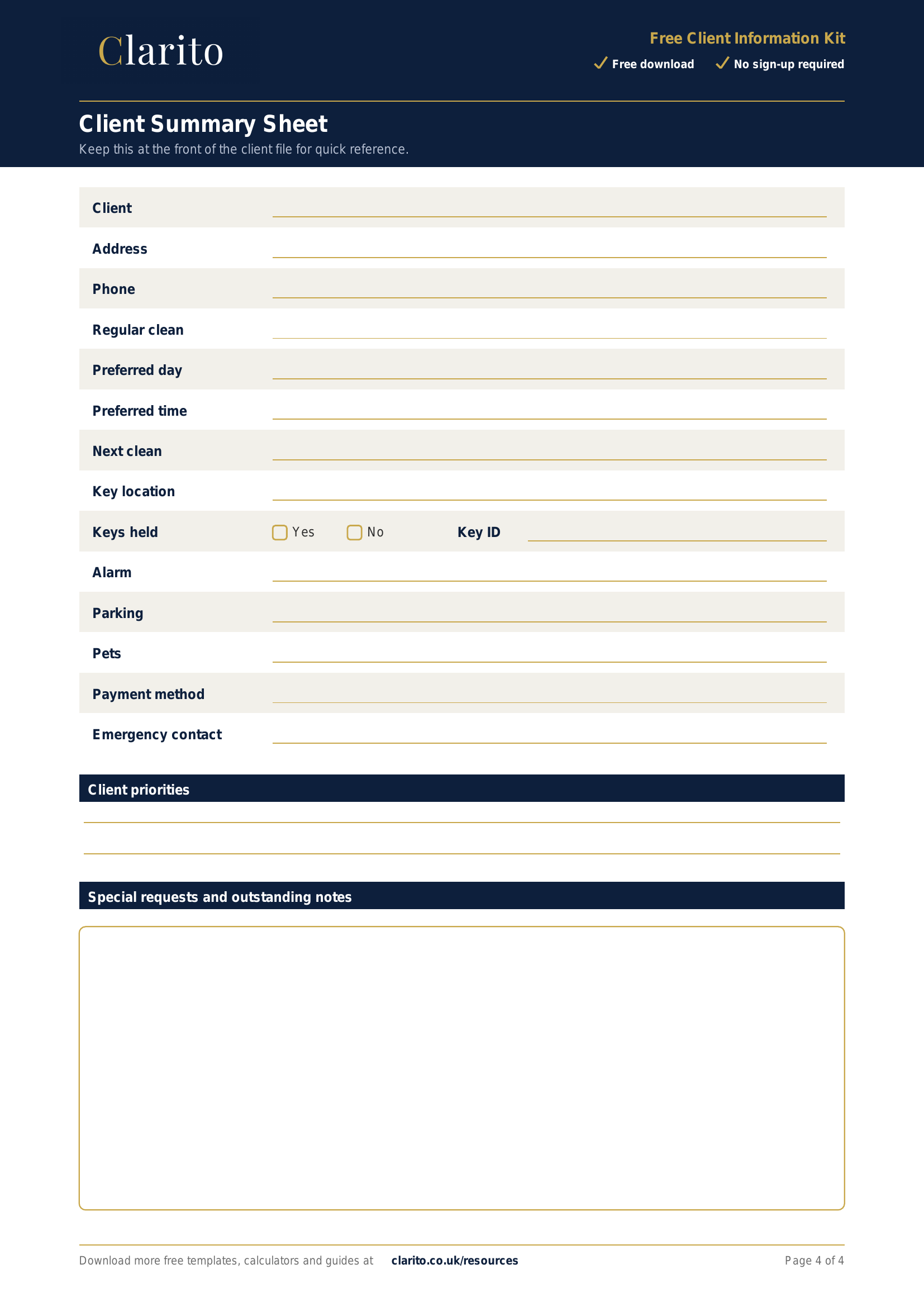
- Client Summary Sheet
Designed specifically for UK self-employed cleaners.
Whether you keep paper records or use software, this kit helps you collect everything you need before the first clean.
Free Download
Download the Free Client Information Kit.
No sign-up required.
The download includes:
- Client Information Form
- Property & Cleaning Preferences Sheet
- Important Property Information Sheet
- Client Summary Sheet
Why Every Cleaner Should Collect Client Information
The little details make a big difference.
Knowing where to park, whether there's a key safe, which rooms need extra attention or whether the family has pets helps every clean run more smoothly.
Rather than relying on memory or searching through old text messages, a client information form keeps everything together in one place.
It also helps you provide a more consistent service, especially if you clean the property every week or every fortnight.
What Information Should You Collect?
A good client information form should cover far more than just a client's address and phone number.
Here are some of the most important details to record.
Client Details
Start with the basics.
Record:
- Client name
- Property address
- Contact number
- Email address
- Emergency contact
Having this information together makes it much easier to contact your client if plans change or there's an issue during a clean.
Cleaning Schedule
It's useful to record:
- Regular cleaning day
- Preferred arrival time
- Cleaning frequency
- Next scheduled clean
This gives you a quick overview of the client's routine.
Access Information
One of the most common causes of delays is not knowing how to access the property.
Record details such as:
- Key safe location
- Alarm code or instructions
- Gate codes
- Whether you hold a key
- Key identification number
- Parking arrangements
Having these details ready before you arrive saves time and avoids unnecessary phone calls.
Cleaning Preferences
Every client is different.
Some prefer eco-friendly products.
Some always want beds changed.
Others have rooms they don't want cleaned.
Recording these preferences helps you provide a consistent service every time.
Examples include:
- Preferred cleaning products
- Products to avoid
- Bed changing
- Laundry
- Ironing
- Internal windows
- Bins
- Areas to avoid
Client priorities
One of the best questions you can ask is:
"What would make you happiest after each clean?"
The answer often tells you exactly what matters most to that client.
Property Information
It's also worth recording useful information about the property itself.
For example:
- Stop tap location
- Fuse box
- Utility meters
- Restricted rooms
- Valuable items
- CCTV
- Risks or hazards
Most days you won't need this information.
When you do, you'll be glad you have it.
Pets
If there are pets at the property, make a note of:
- Type of pet
- Their name
- Whether they stay indoors
- Any special instructions
Small details like remembering not to let the cat outside help build trust with your clients.
Why This Helps Your Business
Keeping organised isn't just about making your own life easier.
It also helps your clients feel confident that they're dealing with a professional business.
When you already know where to park, how to access the property and what the client expects, the whole experience feels smoother.
It also means you're less likely to forget important details weeks or months later.
Paper or Digital?
Many cleaners begin by keeping paper records.
That's absolutely fine and often works well when you're first starting your business.
As your client list grows, however, it becomes much easier to keep everything digitally.
Updating a client's alarm code, changing their preferred cleaning day or adding a new note only takes a few seconds.
Keep Client Information Secure
Client information often includes addresses, phone numbers and property access details.
Store completed forms somewhere secure.
If you're keeping paper copies, make sure they're stored safely.
If you're storing information digitally, use password-protected devices or secure software.
If you collect and store personal information as part of your business, UK data protection law may apply. Many self-employed cleaners also need to register with the Information Commissioner's Office (ICO), depending on how they process personal data. It's worth checking the ICO's guidance to understand your responsibilities.
Download the Free Client Information Kit
Our free Client Information Kit is designed specifically for UK self-employed cleaners.
It includes:
- Client Information Form
- Property & Cleaning Preferences Sheet
- Important Property Information Sheet
- Client Summary Sheet
Simply print the pages you need and complete them before a client's first clean.
Looking for a Digital Alternative?
If you'd rather keep all of this information digitally, Clarito is designed specifically for UK self-employed cleaners.
With Clarito you can store:
- Client contact details
- Addresses
- Access information
- Cleaning preferences
- Notes
- Quotes
- Jobs
- Invoices
Everything is organised in one place, making it easy to find exactly what you need before every clean.
Frequently Asked Questions
Do I need a client information form?
No, but it makes running your business much easier. Instead of relying on memory or searching through messages, everything is recorded in one place.
Should the client complete the form?
It's usually best to complete it together. That gives you the chance to ask follow-up questions and make sure nothing important is missed.
How often should I update the information?
Review it at least once a year or whenever something changes, such as a new alarm code, a different payment method or updated cleaning preferences.
Is it safe to record alarm codes?
Yes, provided you store completed forms securely and only keep access information where it cannot be viewed by other people.
Related Resources
- How to Organise Your Cleaning Business and Save Time Every Week
- Cleaning Invoice Template (Free UK Download)
- What Expenses Can Self-Employed Cleaners Claim?
- Free Cleaning Quote Calculator
Related Resources
Download the Free Client Information Kit or try Clarito free during testing.
Download Free KitAbout the author
Written by Clarito. Clarito builds software designed specifically for UK self-employed cleaners. We publish practical guides, free templates and business resources to help cleaners save time and stay organised.